
Why Local SEO is Your Takeaway’s Secret Weapon… and How to Get Customers Lining Up Faster Than You Can Say ‘Extra Sauce’!
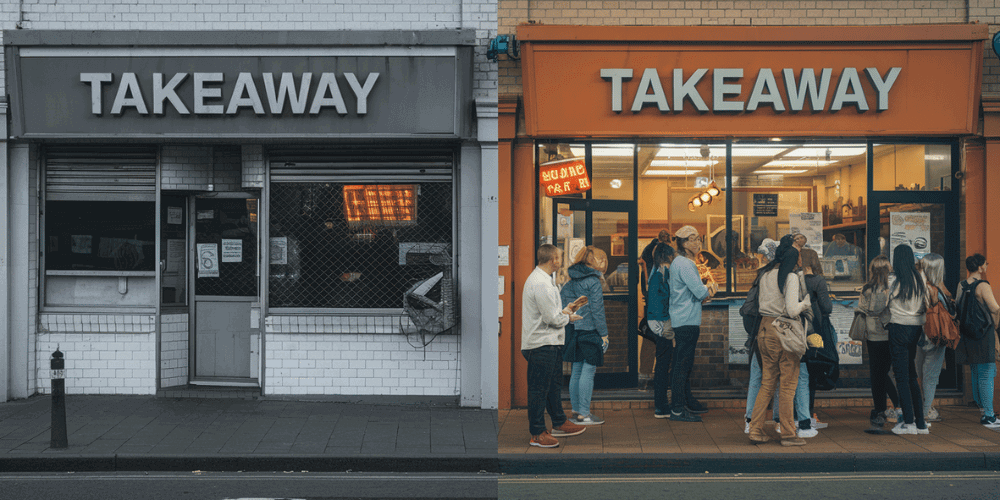
Which takeaway would you rather own?
Are you tired of handing over big chunks of your profits to delivery apps? It's a common frustration. While delivery platforms can be useful, they often eat into your earnings. But what if there was a better way to attract customers – one that keeps more of the profit in your pocket? The answer is Local SEO. Think of it as your secret weapon for attracting local customers. It’s like adding a sprinkle of online visibility to your delicious food, helping hungry people in your area find you quickly and easily.
Local SEO – Your secret weapon against hidden gem status!
Local SEO: From Buzzword to Business Booster – What It Really Means for Your Takeaway's Success
Local SEO Explained Simply
SEO or its full name, Search Engine Optimisation, might sound technical, but the core idea is straightforward, especially for takeaway restaurants. Local SEO is about ensuring that when someone in your area searches online for food like yours – say, "best pizza near me" – your takeaway is the first option they see.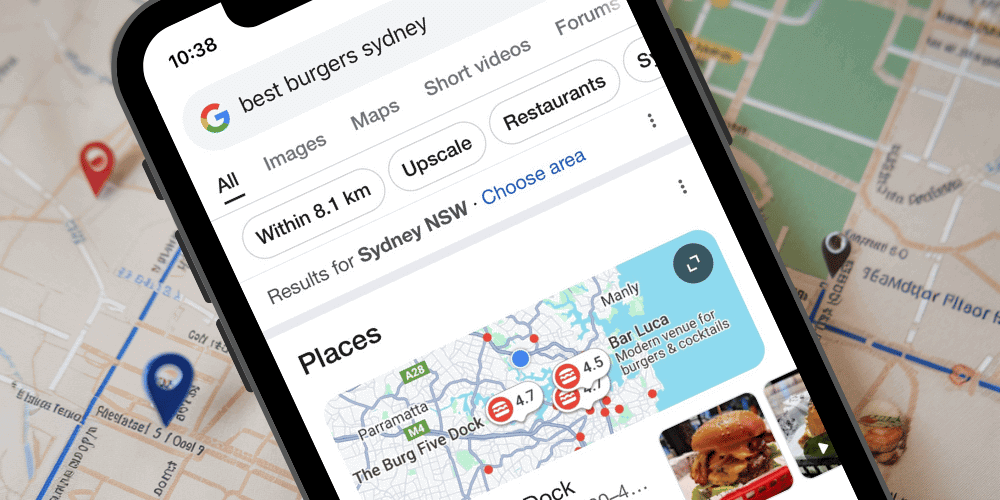 It's about placing your menu in front of local customers at the very moment they’re deciding where to eat, or who to buy from. This means turning online searches into real-world customers and, most importantly, increasing your profits.
Why Local SEO is Key for Takeaway Restaurants – Reach Customers Right Where They Are
Consider your customer base. They're primarily local – people in your neighbourhood, nearby offices, and those passing through your area. Takeaway food is a local purchase. People search for “takeaway near me” because they want something convenient and close by. Local is where your customer action is.
Your customers are in your local area - reach them directly!
Think about your own habits. When you're hungry for takeaway, you’re not going to search for something miles away. You want something nearby, convenient, and tasty. Local SEO helps you capture those customers actively searching for food in your area, leading to increased profit for your business. It’s about focusing on your community first and dominating your local market. For takeaway restaurants, local SEO isn't just important—it's essential. Here's why:- 91% of Australian consumers use search engines to find local businesses
- 76% of people who search for something nearby on their smartphone visit a business within a day
- 28% of local searches result in a purchase
Is Local SEO Worth the Investment? Let's Talk Business Growth
Showing You the Return on Investment
If you’re wondering if local SEO is a worthwhile investment of your time and resources. That's a smart question. Let’s look at the potential return and why local SEO can be incredibly beneficial for your business.
Local SEO – Watch your business grow!
Instead of asking about the cost of local SEO, consider the value it brings. Effective local SEO acts like a growth engine, delivering tangible business benefits. Here’s how local SEO can contribute directly to your bottom line:- Increase Direct Orders, Improve Profit Margins: Customers who find you through local search and order directly (via your website, phone or in store) are more profitable. You avoid the commission fees charged by third-party delivery apps, meaning more revenue stays with your business.
- Boost Order Volume and Overall Revenue: Enhanced online visibility means more people discover your menu. Being prominently featured in local search results drives traffic and order volume. Imagine a steady stream of new customers finding you each week – this is the ongoing benefit of local SEO.
- Build Customer Loyalty and Long-Term Value: Local SEO helps you connect with your community, fostering a loyal customer base. Satisfied local customers become repeat customers, providing a stable foundation for long-term business success and consistent revenue.
- Compete Effectively Without a Huge Marketing Budget: You don’t need to spend heavily on advertising to compete with larger chains in your local area. Local SEO provides a level playing field, allowing you to achieve top local search rankings through optimised online presence and engagement. It’s about smart strategies, not just deep pockets.
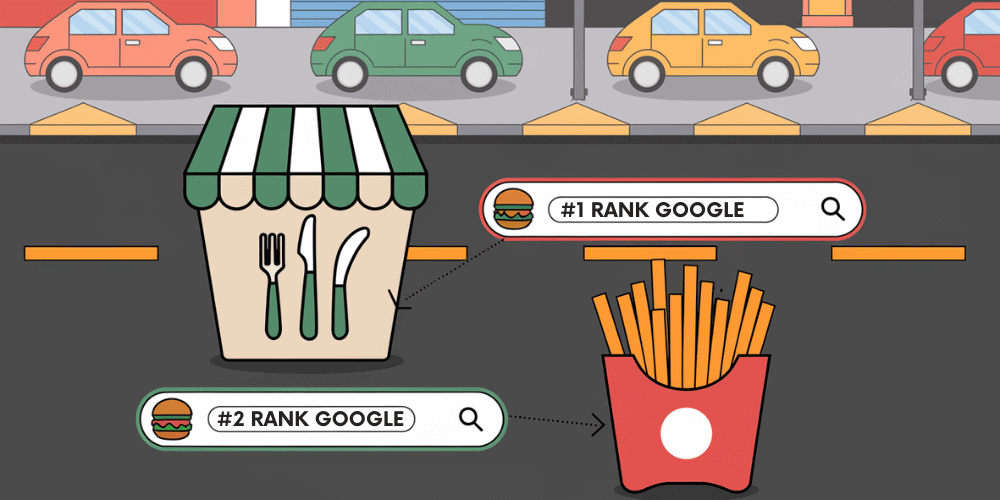
Local SEO – Competing and winning in your local market!
Consider this: Businesses with optimised Google Business Profiles often see a significant increase in customer inquiries – calls and website visits. For a takeaway restaurant, these inquiries directly translate to orders and increased revenue. These statistics say it all:- 46% of all Google searches are seeking local information
- Local searches lead to purchases 28% of the time
- 78% of location-based mobile searches result in an offline purchase
How Much Should I Pay for Local SEO?
One of the most common questions from takeaway restaurant owners is about the cost of local SEO. The truth is, it varies based on your needs, location, competition, and whether you're doing it yourself or hiring help.DIY Costs
If you're handling local SEO yourself, the basic essentials can be very affordable:- Google Business Profile: Free
- Basic directory listings: Free to $20 per month
- Website hosting and domain: $100-300 per year
- Basic SEO tools: $0-100 per month (many offer free versions)
Professional SEO Services
For professional help, costs typically fall into these ranges:- One-time local SEO audit: $300-1,000
- Basic monthly local SEO package: $300-800 per month
- Comprehensive local SEO campaign: $1,000-2,500+ per month
- Project-based pricing (e.g., setting up citations): $500-1,500
Actionable Local SEO for Takeaways – A Practical Guide
Get Started with Local SEO Today
Let's move from theory to practice. Ready to implement local SEO for your takeaway? Great! It's not complicated, and you can start making progress with some straightforward steps. You don’t need to be a tech expert to get started. Here’s a practical guide to local SEO for your takeaway restaurant, offering actionable steps to improve your online visibility and attract more customers.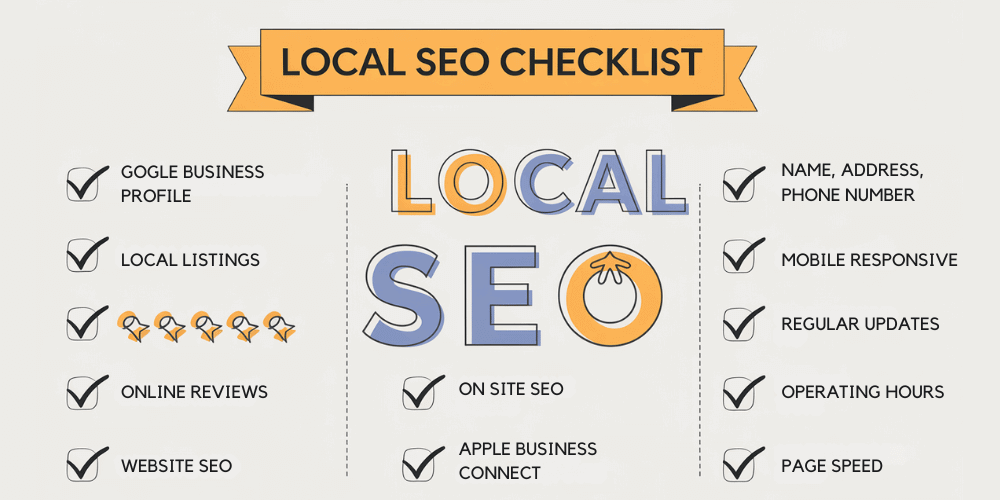
Your Actionable Local SEO Checklist – Start boosting your visibility now!
Google Business Profile (GBP) – Your Free Online Hub
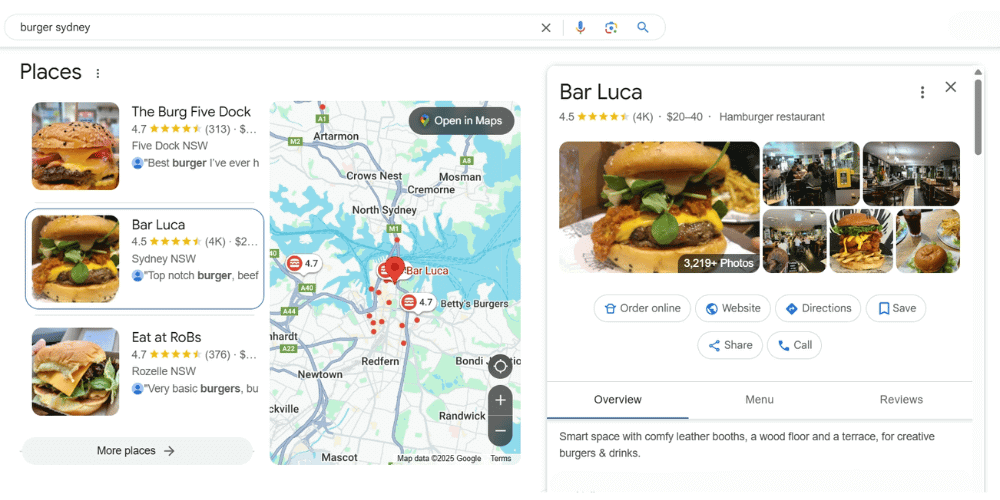
Google Business Profile – Your central online presence.
Your Google Business Profile (GBP) is essential. Think of it as your free and highly visible online business listing on Google. It’s often the first impression customers have of your restaurant when they find you online. Best of all, it’s completely free to set up and use! It serves as your digital storefront, menu display, and customer review platform all in one. A well-managed GBP is fundamental to local SEO success.Action Plan to Optimise Your GBP for Success:
-
- Claim and Fully Optimise Your Listing: Begin by claiming your GBP listing on Google Business Profile. If your business is already listed (which is likely), claim ownership and verify it. Treat this listing as prime online real estate – it’s highly valuable for attracting local customers.
- Complete Every Section Thoroughly: Maximize the effectiveness of your GBP by providing comprehensive and accurate information. We’re talking:
- Accurate Business Name, Address, and Phone Number (NAP): Make sure these are spot-on, and consistent with your website and other online listings (more on that later).
- Categories: Choose the most relevant categories for your takeaway. Be specific! “Burger Restaurant,” “Pizza Takeaway,” “Fish and Chip Shop,” etc.
- Website Link: Crucial for direct orders! Link to your online ordering page if you have one.
- Operating Hours: Especially important for takeaways! Make sure they’re accurate, including holiday hours. No one wants to rock up for a feed only to find you’re shut!
- Menu: Upload your menu, show off your signature dishes and get those taste buds tingling.
- Order collection / Order delivery: Link in all the different ways that customers can order from your store. Always have you own website as the first link, then add in any other third party platforms you sell on e.g. Uber Eats, DoorDash, Menulog etc.
- Attributes: Tick all the relevant boxes – “Takeaway,” “No-contact delivery,” “Outdoor seating” (if applicable), “Halal options,” etc. Help customers find exactly what they’re looking for.
- High-Quality Photos: This is where you can really make your GBP listing drool-worthy! Invest in some good quality photos (no blurry phone snaps, please!). Show off:
- Appetising Food Photos: Close-ups of your burgers, pizzas, pad thais, the works! Make ‘em hungry just by looking!
- Interior and exterior shots of your shop: Show a clean, inviting space.
- Happy staff: Friendly faces make a good impression.
- Even happy customers (with their permission, of course!): Social proof is powerful.
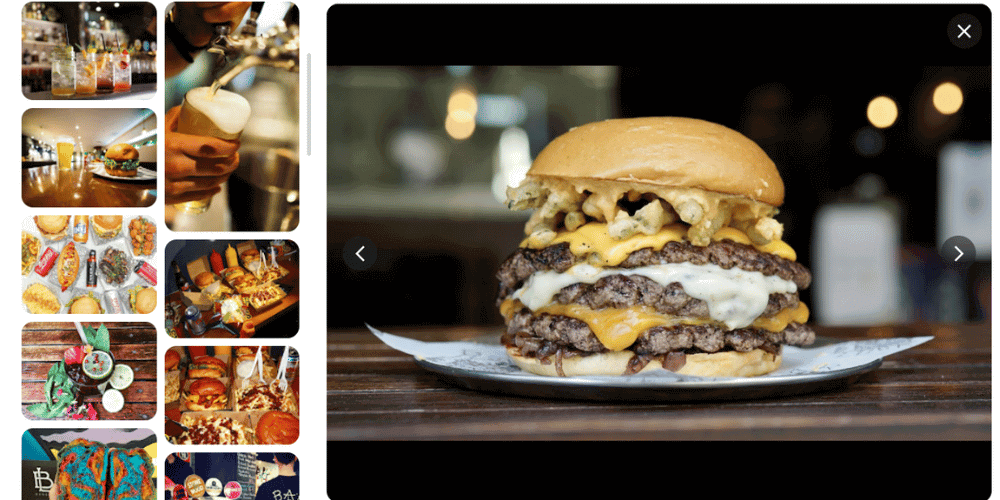
Food photos that make 'em drool – and order!
- Maintain and Update Regularly: Your Google Business Profile isn’t a “set and forget” thing. Keep it updated regularly to keep customers (and Google) happy.
- Regular Posts: Use Google Posts to share specials, new menu items, events, or just general updates. Think of it as your mini-social media feed within Google search.
- Answer questions promptly: Customers can ask questions directly on your GBP listing. Answer them quickly and helpfully – good customer service starts online!
- Monitor and respond to reviews (we’ll get to reviews in more detail soon!):
Local Listings – Expand Your Online Reach
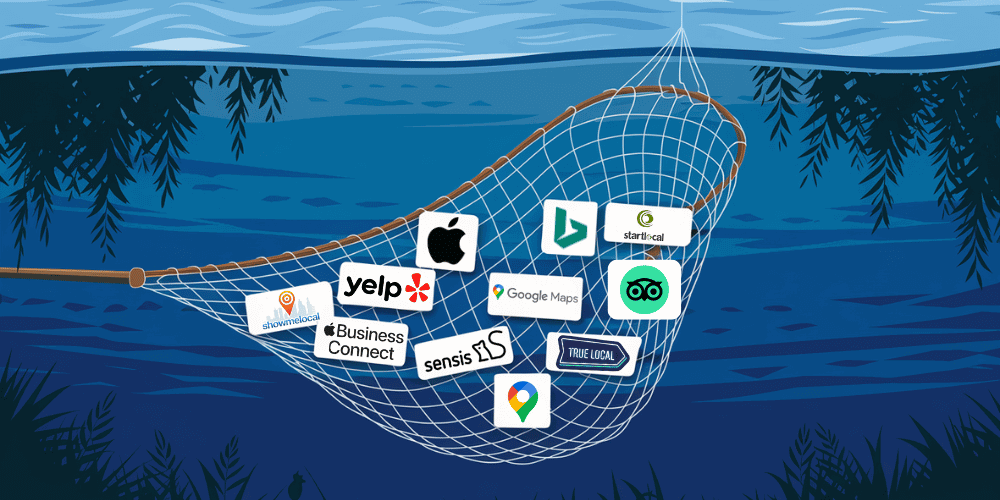
Cast your net wide with local listings!
Think of local listings as extra fishing lines in the local customer pond. Besides Google, there are other online directories and platforms Aussies use to find local businesses. The more places you’re listed (and listed correctly), the wider your net, and the more profit-fish you’re likely to catch!Action Plan for Listing Expansion:
- List on Key Australian Directories: Focus your energy on the directories that actually matter in Australia. We’re talking:
- Google Business Profile (again!): Yes, it’s crucial enough to mention twice!
- Apple Business Connect: Loads of Aussies use iPhones and Apple Maps for local searches, Apple Business Connect is your pathway to this.
- Tripadvisor: Still popular for restaurant reviews, especially for tourists (if you’re in a touristy area), plus it is referenced for Apple Maps (if you don't have any ratings through Apple Business Connect).
- Bing Places: Microsoft's search engine.
- Yelp: Used by some Aussies for local business reviews.
- TrueLocal: Aussie directory site.
- Sensis (Yellow Pages online): Yep, Yellow Pages still exists online! Worth a listing for local cred.
- See our blog post on Australian Directories for a comprehensive list.
- NAP Consistency = Profit Credibility: This is super important: Make sure your Name, Address, and Phone number (NAP) are exactly the same across every single listing. Seriously, Google is like a stickler for consistency. Inconsistent info confuses Google (and customers!), and can hurt your local search rankings. Get your NAP sorted and stick to it like glue!
Online Reviews – Build Trust and Attract Customers Through Feedback
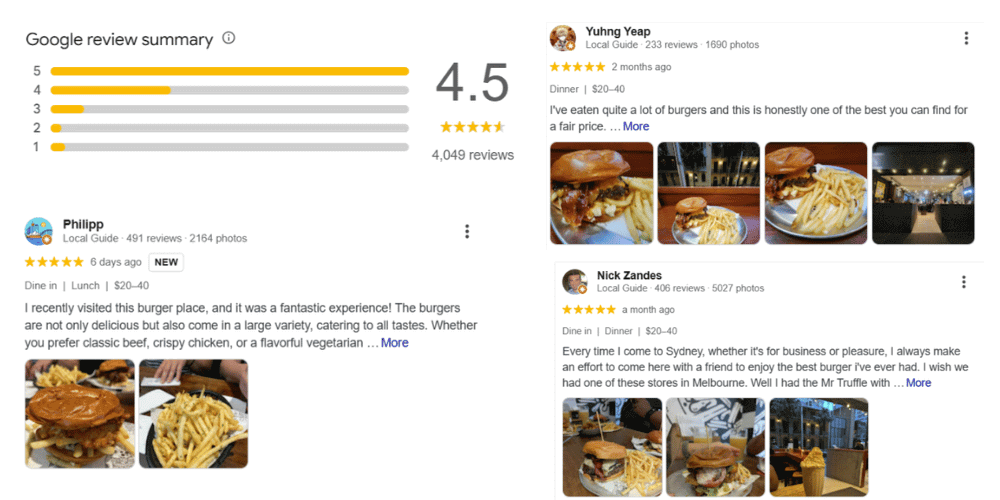
Reviews – Your online word-of-mouth, and profit boosters!
Online reviews are today’s word-of-mouth marketing. Potential customers highly value reviews when choosing a local business. Positive reviews build trust, enhance your reputation, and influence potential customers to choose your takeaway. Google also considers positive reviews a strong indicator of business quality, which can improve your local search rankings. Reviews aren't just for bragging rights – they are profit fuel:- 88% of consumers trust online reviews as much as personal recommendations
- Restaurants with a 3.5-star rating get 63% more clicks than those with lower ratings
Action Plan to Encourage and Manage Reviews:
- Streamline the Review Process: Make it as easy as possible for satisfied customers to leave reviews. Consider using systems like Hungry Crowd’s Google Reviews Pro to actively encourage and simplify the review process for happy customers. These systems are designed to prompt positive reviews, boosting your overall review count and average rating.
- Proactively Ask for Reviews (At the Right Time): Don’t passively wait for reviews; actively request them from happy customers. The optimal time to ask is shortly after they’ve had a positive experience, such as after enjoying a great meal. You can:
- Train your staff to verbally ask happy customers: “Hope you enjoyed your [dish]! If you did, we’d love it if you could leave us a quick review on Google!”
- Include review requests on receipts, menus, flyers, and your website: Make it easy with a direct link to your Google review page (Hungry Crowd can help you create these!).
- Use QR codes: Pop a QR code on your takeaway bags or in-store that customers can scan to leave a review instantly on their phones. Tech-savvy and convenient!
- Respond to Reviews Like a Pro: Don’t just ignore reviews – engage with them!
- Thank the good reviewers: A simple “Thanks so much for your kind words, [Customer Name]! We’re stoked you enjoyed your [dish] and hope to see you again soon!” goes a long way. Show you appreciate their business!
- Politely address the not-so-good ones: Yep, you’ll get the odd negative review. Don’t panic! Respond professionally and empathetically. Apologise, ask for more details, and offer to make things right. Turning a negative into a positive can actually impress potential customers and show you care about customer service.
- Avoid Artificial Reviews: Never purchase fake reviews or incentivise customers to leave a review. Google's algorithms are sophisticated and can detect fraudulent reviews. It’ll backfire big time, damage your reputation, and you might even get penalised in search rankings. Stick to earning honest, genuine reviews from real customers – it’s the only way to build lasting trust and profit.
On-Page SEO – Website Basics That Boost Your Bottom Line
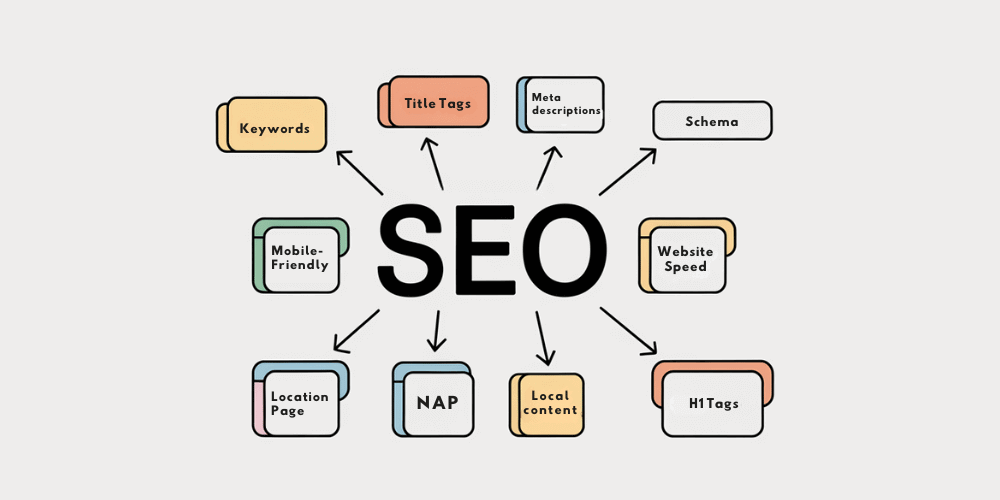
Website SEO – Making your website a profit-generating machine!
You need to make sure your takeaway restaurant is pulling its weight in the local SEO stakes. Think of your website not just as an online brochure, but as a profit-generating machine when optimised properly. Don’t worry, we’re not talking about needing to become a coding wizard. Just a few key tweaks can make a big difference to your local search rankings and your bottom line.Optimise Your Website for Local Search
Your website should clearly signal to both users and search engines that you serve a local customer base. Here’s how:- Location Pages: If you have multiple locations, create separate pages for each. Each page should have unique content, including address, opening hours, contact details, embedded Google Map, and directions.
- Embed Google Maps: Add a Google Map to your ‘Contact Us’ page, and location pages. This helps customers find you and reinforces your location to Google.
- Schema Markup: Implement Local Business schema markup on your website, especially the homepage and contact page. Schema markup helps search engines understand key information about your business, including your NAP, business type, and reviews. You can use Google's Schema Markup Generator to create the code.
- Local Content: Create blog posts and content that are relevant to your local community. Write about local events, partner with local businesses, or feature local suppliers. This content signals your local relevance to search engines and provides value to local customers.
Action Plan for a Profit-Boosting Website:
- NAP on Every Page – Your Profit Calling Card: Remember NAP? (Name, Address, Phone Number). Make sure it’s clearly visible on your website, ideally in the footer of every single page. It’s like your business’s online calling card, making it super easy for customers (and Google) to find your essential contact info.
- Local Keywords = Profit Keywords: Sprinkle local keywords naturally throughout your website content. Think about what locals would actually search for when looking for takeaway in your area. Examples:
- “[Your Suburb] Takeaway”
- “Best [Cuisine] in [Local Area]”
- “[Dish] Takeaway [Nearby]”
- “Takeaway Restaurant [Your Suburb] Open Late”
- Mobile-Friendly = Profit-Friendly: This is non-negotiable. Most people search for takeaways on their phones, on the go, when hunger strikes. If your website is clunky, slow, or hard to navigate on mobile, you’re losing customers (and profits!) hand over fist. Make sure your website is responsive – meaning it automatically adapts to look great and work perfectly on any device, especially smartphones. Test it yourself on your phone – is it easy to browse your menu, find your phone number, and place an order? If not, it’s time for a mobile-friendly makeover!
- Speed Matters (for Profits!): Nobody likes waiting around for a website to load, especially when they’re hungry and in a hurry to order. Website speed is a ranking factor for Google, and it’s crucial for keeping customers happy and ordering. Optimise your website for speed – compress images, use caching, and make sure your website hosting is up to scratch. A fast website = more happy customers = more profits in your pocket.
Leverage Social Media with Local Focus
 Social media platforms offer excellent opportunities to strengthen your local presence.
Tips for local social media marketing:
- Geo-tag your posts: Increase local visibility by geo-tagging your social media posts with your takeaway's location.
- Engage with local community pages and groups: Join and actively participate in local community pages or groups on Facebook, Nextdoor, etc. Share relevant content and engage in local conversations.
- Share local news and events: Post about local news, events, or festivals happening in your area. This shows you're part of the community and can attract locals interested in those events.
- Run location-specific promotions or contests: Create promotions or contests targeted only at your local followers. For example, a "Suburb Name Residents Discount" or a "Tag a Local Friend" contest.
- Encourage customers to tag your location: Encourage customers to tag your takeaway's location in their food photos on social media. User-generated content with location tags expands your reach.
- Use local hashtags: Use hashtags that are specific to your city, suburb, or neighbourhood in your posts (e.g., #SydneyTakeaway, #NewtownEats).
Voice Search Optimisation – Be Ready for Voice Queries

Voice Search – Talk to your phone, order some takeaway!
Voice search is rapidly increasing thanks to the likes of Apple's Siri and Amazon's Alexa voice assistants. People are beginning to talk to their phones to find what they need. “Hey Siri, find me a good burger takeaway nearby.” “Okay Google, where’s the closest Thai takeaway open now?” You've got to be ready for this voice search revolution, because it’s another way locals are finding (and ordering from!) takeaways.Action Plan to Get Your Takeaway Heard in Voice Search:
- Target Conversational Keywords: Voice searches are typically conversational and longer than typed searches. Focus on long-tail keywords that reflect natural language queries, such as:
- “Where can I get a good vegetarian pizza takeaway near me?”
- “What’s a highly-rated fish and chips shop open late in [your area]?”
- “Find me directions to the closest burger takeaway with outdoor seating.”
- Google Business Profile Accuracy: Voice search relies HEAVILY on accurate and up-to-date information in your Google Business Profile. Why? Because when someone asks Siri or Google Assistant for “takeaway near me,” they’re pulling their recommendations straight from GBP listings! So, make darn sure your GBP is 100% accurate, complete, and sparkling clean. Double-check your NAP, opening hours, categories, and address – voice search success depends on it!
Local SEO: A Sustainable Strategy for Long-Term Growth
Building a Lasting Customer Base
Effective local SEO is not a quick fix but a long-term strategy for building a sustainable customer base and consistent revenue stream for your takeaway restaurant. It requires ongoing effort and consistency to achieve lasting results. Think of local SEO as cultivating a valuable asset for your business. Consistent local SEO efforts build your online visibility, enhances your reputation, and establishes a strong connection with your local community. Like nurturing a plant, local SEO requires regular attention and care to flourish and yield results. Commit to consistently updating your GBP, managing reviews, and optimising your website to see sustained growth in customer acquisition and profitability over time.How Do I Do My Own Local SEO?
If you're ready to tackle local SEO yourself, here's a straightforward monthly checklist to keep you on track:Monthly Local SEO Checklist for Takeaway Restaurants
Week 1: Google Business Profile Maintenance- Check and update business information if needed
- Post at least one update (special, event, or announcement)
- Respond to any new reviews
- Upload 2-3 new photos of food or restaurant
- Request reviews from happy customers
- Analyse review sentiment for improvement opportunities
- Check competitor reviews for insights
- Address any negative feedback with improvements
- Update any seasonal menu changes
- Create one new piece of locally relevant content
- Check website loading speed
- Review analytics for user behaviour insights
- Verify NAP consistency across all platforms
- Identify and fix any incorrect listings
- Look for new listing opportunities
- Update any outdated information on third-party sites
- Google Search Console (Free) - See how your site appears in search results
- Google Analytics (Free) - Track visitor behaviour on your website
- Moz Local ($129/year) - Manage citations and track local ranking factors
- SEMrush (Free basic plan) - Research keywords and monitor competitors
- BrightLocal ($29-79/month) - Track local rankings and manage citations
- Whitespark (Pay per use) - Find and build local citations
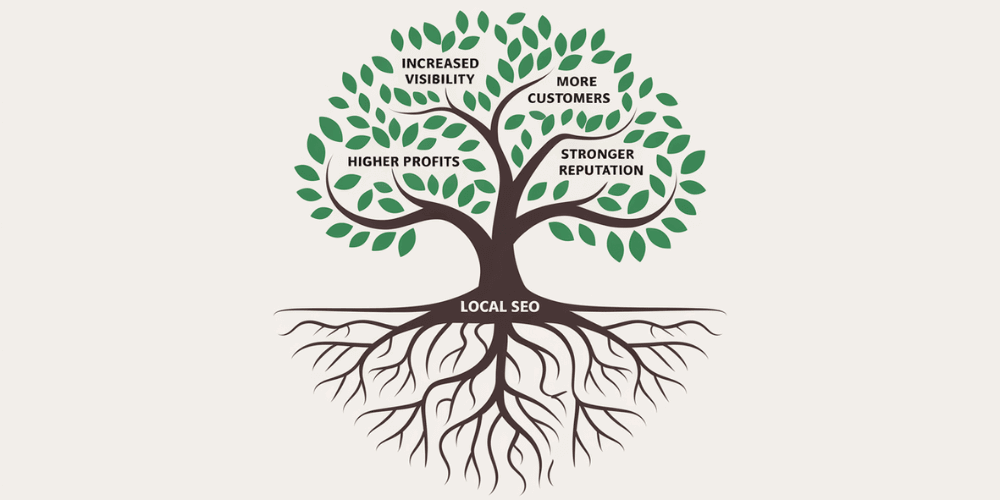
Local SEO - Planting the seeds for long-term business growth.
Ready for Expert Help? Hungry Crowd Can Supercharge Your Local SEO!
Let Us Handle Your Local SEO for Maximum Impact
While DIY local SEO is achievable, it demands time and effort that could be better spent on running your takeaway. If you’re looking to maximise your results efficiently and effectively, Hungry Crowd is here to help.
Focus on your food, we'll focus on your SEO!
We specialise in marketing for takeaway restaurants. We understand the specific local SEO needs of your industry and have the expertise to optimise your online presence for maximum impact. Consider Hungry Crowd your dedicated local SEO team. We handle the complexities of local SEO so you can concentrate on what you do best – providing great food and excellent customer service. Let us take the SEO off your plate (pun intended!) and deliver real, profit-boosting results. Leverage our expertise to streamline your local SEO efforts and achieve significant business growth. Hungry Crowd offers a range of services designed to boost your local SEO performance and drive more customers to your takeaway:- Listing Management: Ensuring accurate and consistent business listings across key directories, saving you time and maximizing your online reach.
- Review Management: Monitoring and managing your online reviews efficiently, turning feedback into positive customer engagement and social proof.
- On-Page SEO Checker & Optimisation: Optimising your website to attract local customers and improve search engine rankings, ensuring your website is a powerful marketing tool.
- Google Reviews Pro System: Our proprietary system to ethically generate more 4 and 5-star reviews, enhancing your online reputation and customer trust.
Conclusion – Stop Being Invisible, Start Being Found (and Profitable!) with Local SEO
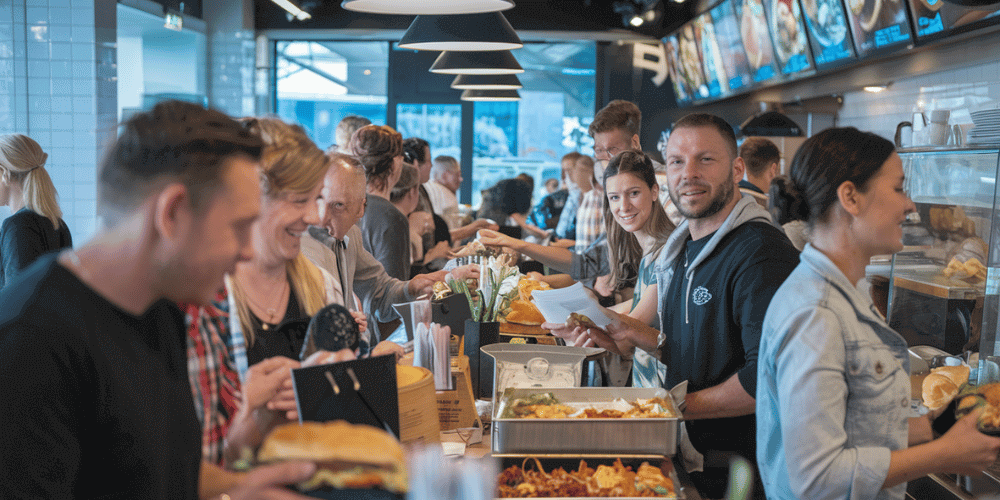
Transform your takeaway into the local favourite with Local SEO!
Local SEO is no longer optional – it’s essential for takeaway restaurants wanting to thrive. In a competitive market, being easily found online by local customers is the key to success. Local SEO is your strategy to move from being a hidden gem to becoming the go-to local takeaway. Ready to transform your takeaway into a local favourite and unlock your full profit potential through local SEO?Contact Hungry Crowd for a Free Local SEO Consultation!